BlogOctober 2, 2025Notes on H3 geospatial indexing
Hexagons, resolutions, and why they beat lat/lng for aggregation
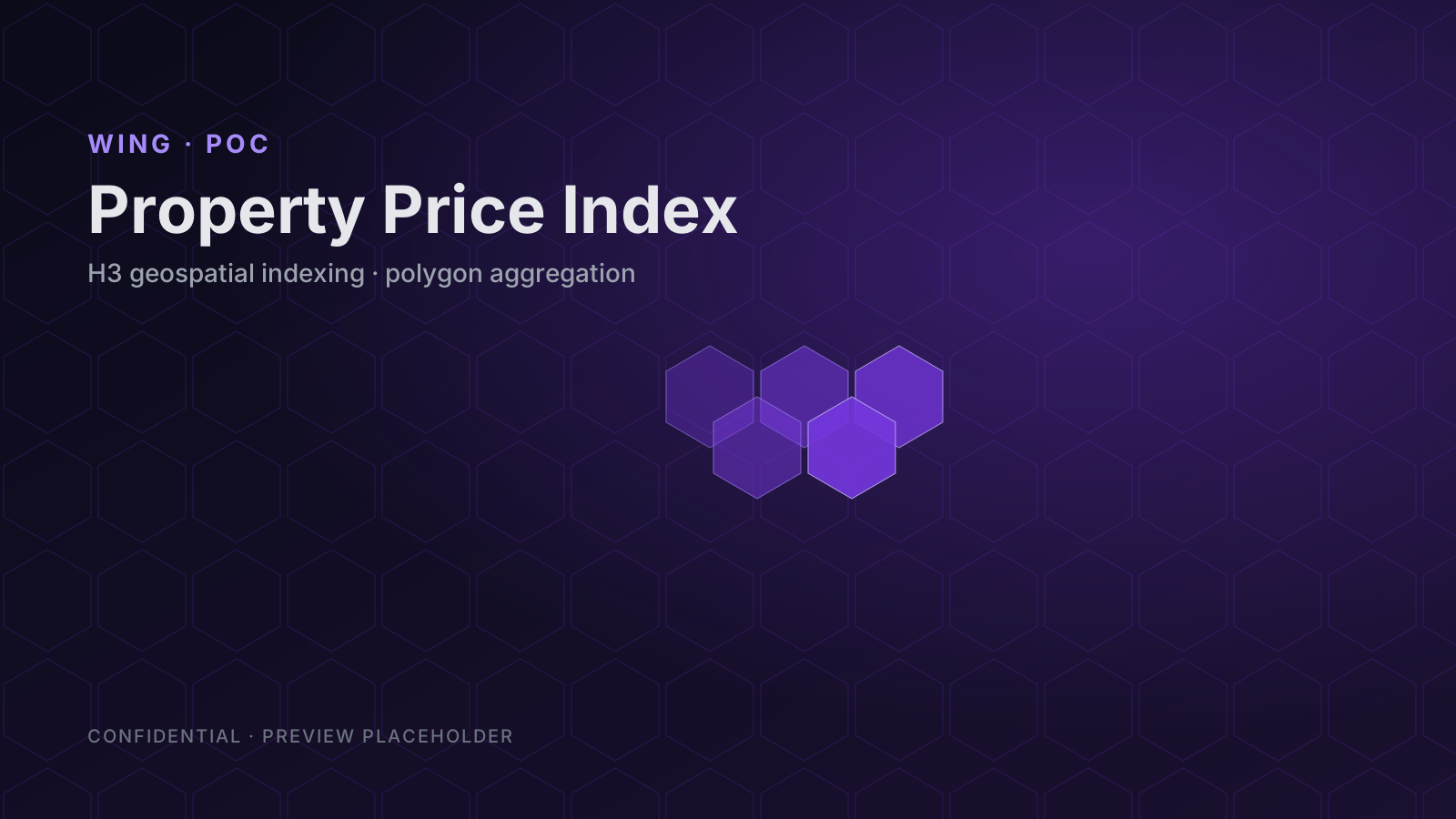
Squares tile a plane neatly but have an awkward neighbor problem — diagonals are farther than edges. Hexagons have six equidistant neighbors, which makes a lot of spatial math cleaner: flow, clustering, heatmap smoothing.
H3 exposes 16 resolutions. A few rules of thumb:
- City-level analytics — resolution 7–9.
- Block-level aggregation — resolution 10–11.
- Building-level — resolution 12+.
Start coarse. Jumping to finer resolutions scales cell count by ~7x each step, which gets expensive quickly.
Polygons rarely fall on clean hex boundaries. You'll either:
- Accept fractional overlap and weight cells by intersection area.
- Snap polygons to H3 cells and accept the rounding error.
Which one is right depends on the use case. For price indices, fractional overlap tends to produce more stable numbers over time.
This is a dummy post — published as placeholder content.